
Research Program
My interdisciplinary scholarship bridges social and medical sciences, translating knowledge across fields to deliver both rapid, practice-changing evidence and deeper theoretical insights. Learner agency and identity development are central to my work, shaped by my perspective as a woman, researcher, and person with a medical disability.
I study agency in the postdigital era — where digital and non-digital experiences intertwine to shape learning — through three guiding questions: How do we learn? Does technology influence learning? How does technology shape human agency?
Key Contributions
Areas of Focus

Postdigital Learner Agency
- This program of research advances the theory of learner agency in postdigital environments (Code, 2025) while critically examining how learning spaces shape and constrain agency (Code et al., 2020, 2022). It focuses on the design and assessment of virtual environments that foster agency, alongside investigations into the psychosocial impacts of technology through public pedagogy. This work also develops robust methods for measuring agency, including the integration of learning analytics to capture how agency is enacted in complex digital contexts.
Inquiry in Digital Education and AI
- This program of research examines inquiry, learner agency, and meaning-making in digital and AI mediated educational environments (Code et al., 2020; Code, 2025). It explores how learners and educators navigate immersive, algorithmic, and hybrid learning contexts through virtual inquiry, game-based learning, and postdigital pedagogies (Moylan & Code, 2025). This work includes the design and study of AI mediated learning environments, immersive virtual simulations, and digital pedagogical models that support critical engagement, reflection, and adaptive learning (Code et al., 2026).

Patient Agency
- This program of research advances the theory of agency in cardiovascular research (Code, Lannon, & Lutrin, 2025) and explores patient agency through biomedical case studies (Theberge et al., 2025). It draws on autoethnographic inquiry to examine patient experience (Code, 2019, 2022) and extends into the design and study of heart failure self-management and peer support technologies, with a focus on how patients enact agency in everyday care contexts.
- $3.5M+
- Total research funding
- 5
- Active grants
- SSHRC + CIHR
- Tri-council funded
- CRC
- Tier II · 2025–2030
Research is supported in part by


Current Work
Active Projects




Past Work
Completed Projects
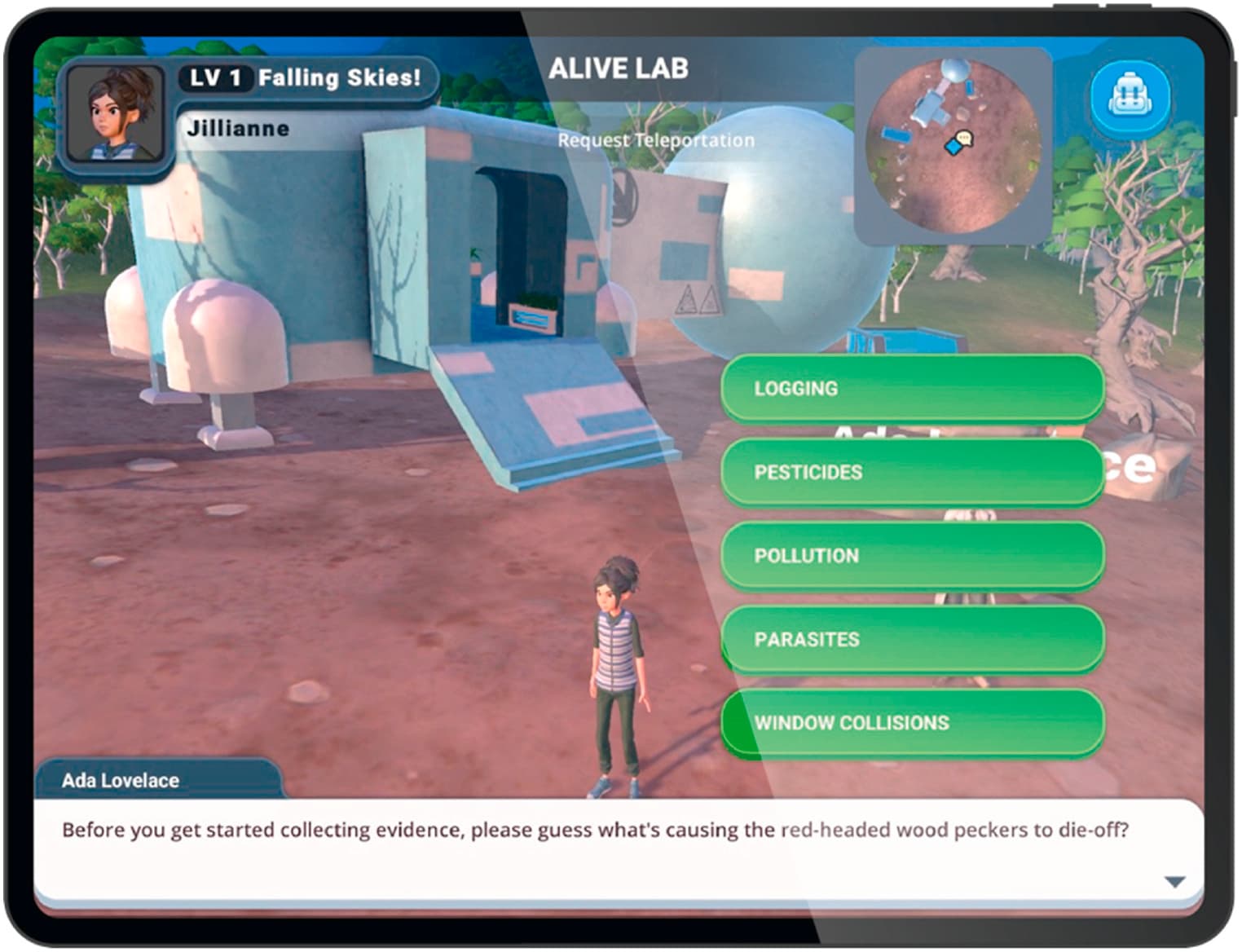
Falling Skies!
Three-dimensional immersive virtual environments (3DIVEs) offer novel possibilities for formative assessment, yet their potential for developing science inquiry in middle school remains under-researched. Existing assessments fail to capture how students exercise agency — setting goals, regulating effort, and persisting through challenge.
PATIENT A Pilot Study
Patients with chronic conditions are increasingly expected to participate meaningfully in research, yet traditional models position them as passive subjects rather than active partners. There is no established framework for understanding or measuring patient agency in research contexts.
From the Heart
Women with heart failure are under-served, under-researched, and under-represented — experiencing worse outcomes than men despite significant burden of disease. Their lived experiences are rarely centered in the design of healthcare resources or patient education.
vCHAT-HF
High-risk COVID-19 patients with chronic heart failure face compounding challenges: anxiety, social isolation, disrupted medical care, and caregiver strain. Digital interventions that provide social network support and evidence-based counseling are urgently needed.
Beyond the Academy
Higher education's career pathways are shifting. PhD graduates and postdoctoral fellows face uncertain labour markets with few models for professional agency beyond traditional faculty positions. Virtual learning communities offer a potential pathway — but their impact on professional development and agency is poorly understood.
Pandemic Transformed Pedagogy
COVID-19 forced a sudden and unprecedented shift to emergency remote teaching (ERT) in technology education — a domain that relies heavily on hands-on, design-based learning. Whether this disruption constituted a 'disorienting dilemma' capable of transforming pedagogy, and what lasting changes it produced, remained unknown.
Virtual Reality Anatomy
COVID-19 disrupted physical anatomy dissection labs — a cornerstone of health sciences education. The pedagogical effectiveness of VR alternatives, and how students emotionally and cognitively engage with virtual specimens compared to physical ones, was unknown.
Unbundled Learning
Patients with chronic conditions — heart failure, PTSD, anxiety, long COVID — spend most of their time outside formal clinical settings. Informal peer networks and social media are already providing education and support, but this learning is rarely studied or designed for. Most research focuses on institutional approaches while ignoring peer-driven educational processes.
Preferences and Decision Needs
Patients with heart failure with reduced ejection fraction (HFrEF) face complex medication decisions with significant quality-of-life implications. Both patients and clinicians lack structured tools to identify decisional needs, understand patient values, and align treatment with what matters most to patients.
ALIVE Research Lab
Agency in Learning, Immersive & Virtual Environments · UBC
Interested in collaborating?
I welcome partnerships on funded research, community initiatives, and scholarly projects.