2026
Code, J., Forde, K., Moylan, R., Lutrin, A., Tasabehji, Z., Ralph, R., Mehta, A., Zap, N., & El Banna, N.
Computers & Education
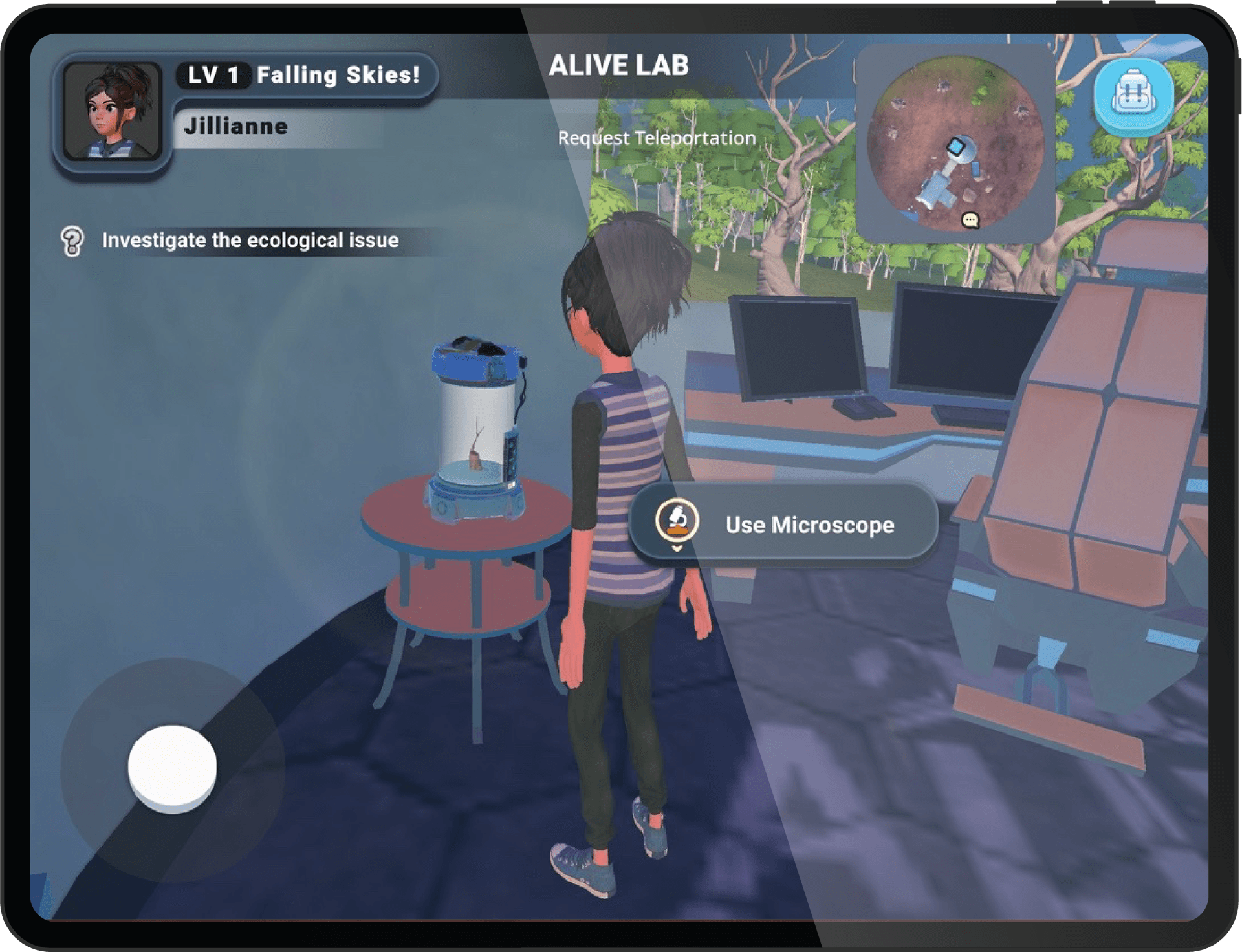
View DOI →Game-based learning environments often support exploration but rarely connect learner agency with rigorous, embedded assessment. This study reports on the design and pilot implementation of ALIVE (Agency for Learning in Immersive Virtual Environments), a virtual inquiry environment that integrates the Agency for Learning framework with Evidence-Centered Game Design. Nine middle and high school students completed an ecological investigation that required evidence collection, hypothesis testing, and causal explanation. Data included think-aloud protocols, gameplay logs, and brief feedback questions. Triangulated analyses captured both convergence and divergence between self-reported and observed agency. Learners showed intentional decisions, strategy shifts, and selective delegation to system supports at points of uncertainty. These findings show how aligned competency, evidence, and task models make inquiry actions visible and interpretable. The study also offers a multisource approach for examining expressions of agency within guided digital inquiry. Limitations include the small sample and single-session design. Future work should examine longer-term patterns, broader implementation, and transfer across domains.
Related Projects
ALIVE
Agency in Learning, Immersive & Virtual Environments
The ALIVE project investigates how learners exercise agency in immersive and virtual environments. Grounded in a theoretical framework of learner agency as a capacity shaped by context, the project examines the design conditions — in both digital and physical environments — that enable learners to act with intention, persistence, and critical awareness. The lab brings together graduate students, postdoctoral fellows, and community partners at UBC.

NARRATE
Learner Agency Emergence Through Algorithmic Literacy
NARRATE explores the human–algorithm relationship in learning contexts — specifically, how learners develop algorithmic literacy and how that literacy shapes the conditions for agency. As algorithmic systems increasingly govern which content learners see, which assessments they receive, and which paths are recommended, the question of whether and how learners can exercise meaningful agency within these systems becomes urgent.